Raynox DCR-250 Macro Lens Recommendation

By   |  Reward me
|  Pin this  |  Share this

This page offers a collection of my personal experiences, opinions and thoughts regarding the Raynox DCR-250 Macro Lens.

The Raynox DCR-250 macro lens is comparable to the Hubble space telescope (very powerful telescope made by NASA) without the price tag.

If you’re looking to explore the world of macro photography and you’re on a limited budget, the Raynox DCR-250 is the perfect solution.

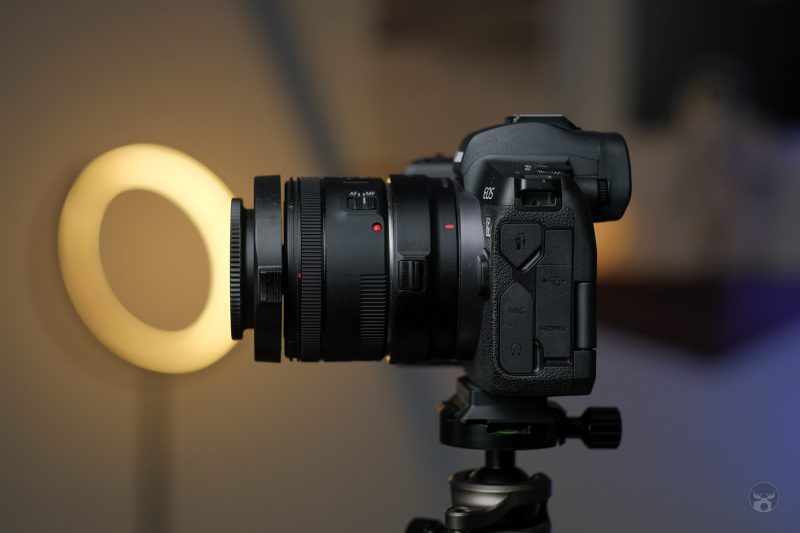
Canon T2i with Raynox DCR-250 - © Copyright Cameratips.com

If you’re interested in this macro lens, I highly recommend purchasing through Amazon (see here) or B&H Photo (see here). I buy new gear every week from these retailers (for my photography business and for this website). They’re the best of the best when it comes to purchasing camera equipment online. As an added benefit, they can usually have your lens packaged and out the door by early afternoon if you order it in the morning.

Intro

The Raynox DCR-250 is not well known to most beginners. Raynox is a third party lens manufacturer located in Japan (corporate website).

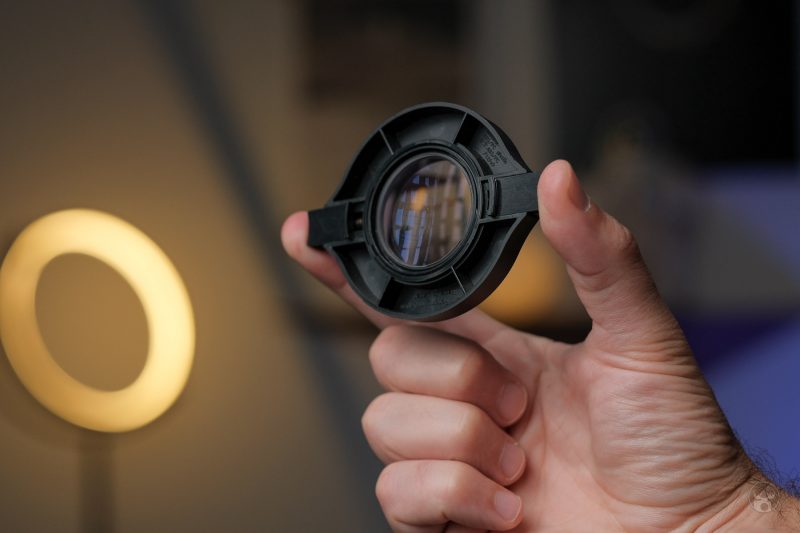
What’s so great about the Raynox DCR-250 is that you can easily clip it to most lenses and instantly increase your magnification power.
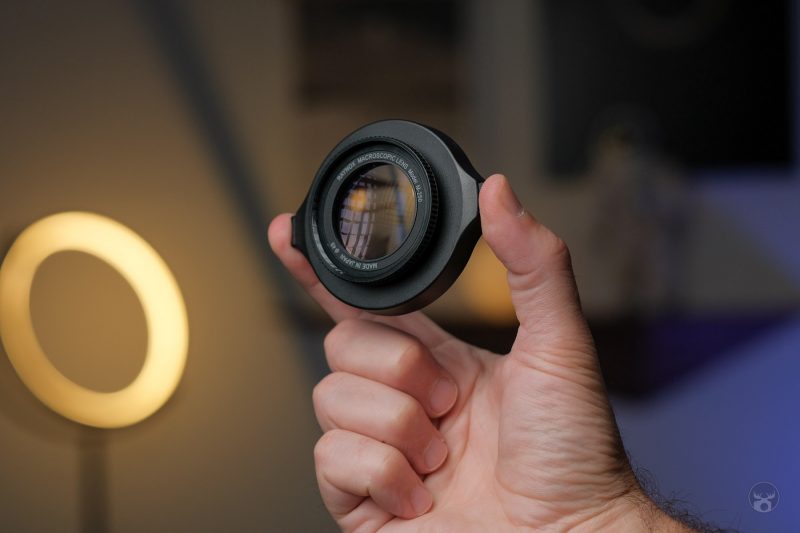
Raynox DCR-250 clips - © Copyright Cameratips.com

Say you’ve got a kit lens (usually 18-55mm) and you’re trying to get up close to a flower. More than likely you’ll experience focus errors due to the minimum focusing distance for that specific lens. The minimum focusing distance is the closest you can get to your subject and still achieve proper focus.

The Raynox DCR-250 allows you to break this barrier and get within a few inches of the subject. This greatly enlarges the subject in your frame which allows for impressive macro shots.

Think of it like reading fine print with your eyes. You can get close to the text, but at some point your eyes won’t be able to focus and the print will look blurry.

Whip out a handy dandy magnifying glass and instantly you can enlarge the size of the print, making it easier to read.

Specs

Compatibility – The Raynox DCR-250 is not a dedicated lens…meaning you can’t attach it directly to your camera. You’ll have to clip it to a lens with a filter size between 52mm to 67mm. The clips grab on to the internal ring on the front lens element.
To get an idea of size, I have some shots of the Raynox DCR-250 with these cameras: Canon T2i, Nikon D3100.

Lens – The lens is made from high index optical glass and produces a very sharp image.

Raynox DCR-250 lens - © Copyright Cameratips.com

Magnification – The lens has a magnification power of 2.5x. You can obtain the maximum magnification power by shooting towards the telephoto end of your lens.

Filter Thread – The lens has a front filter thread that measures in at 49mm, allowing you to attach creative filters for interesting effects.

Size – The lens is roughly 2-inches in diameter and around 0.7-inches thick.

Weight – The lens is very light and weighs in at around 2.1oz.

Sample Photos

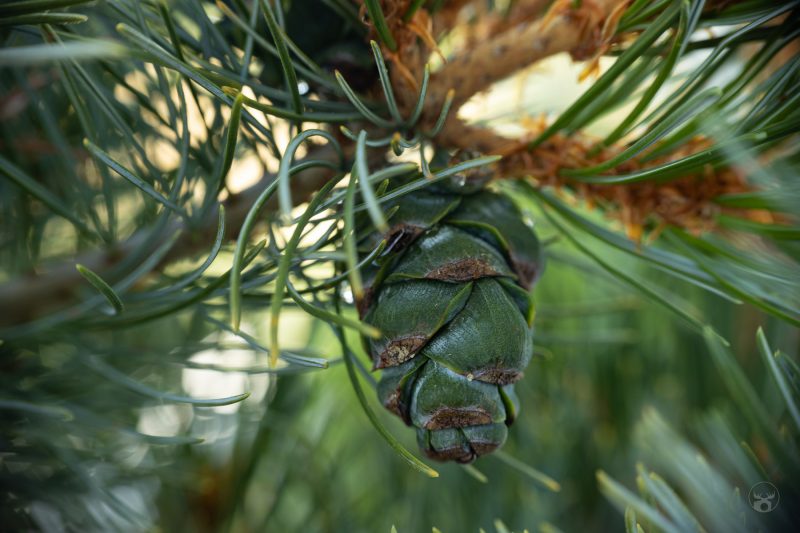
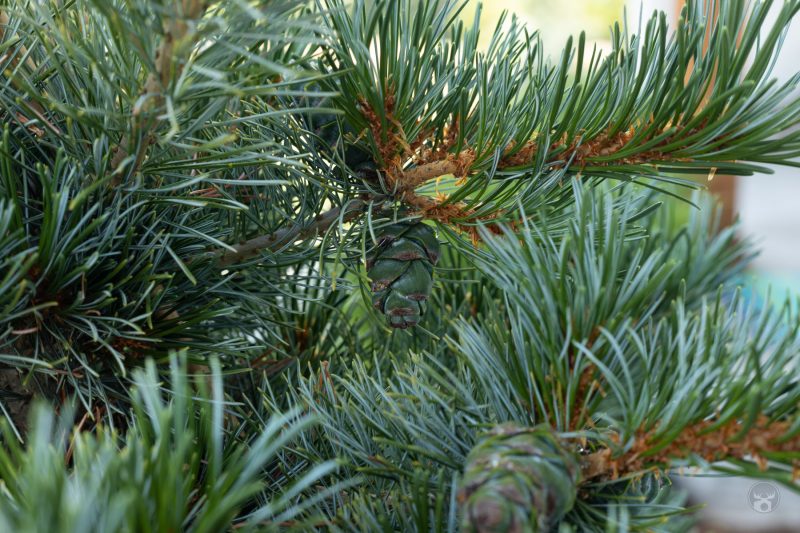
Raynox DCR-250 sample photos

Recommendations

If you’re interested in macro photography and on a limited budget, the Raynox DCR-250 is a fantastic solution.

Raynox DCR-250 - © Copyright Cameratips.com

Most dedicated macro lenses run between $300 and $1000, which is a large investment for most beginners. The Raynox DCR-250 retails for around $60 bucks.

Whenever family and friends ask me about shooting close-ups with their DSLR, I always point them in the direction of the Raynox DCR-250 first. They can always upgrade to a dedicated macro lens at a later date if their interest in macro photography grows and they need pro level results.

In the beginning, your creativity shouldn’t be limited due to expensive lenses. The Raynox DCR-250 allows you to explore the world of macro photography without having to give away a car/mortgage payment.

Moose Approved Retailers & Rockin’ Deals

I buy new gear every week from Amazon and B&H for my photography business and for this website. They’re the best of the best when it comes to purchasing camera equipment online. As an added benefit, they can usually have your lens packaged and out the door by early afternoon if you order it in the morning.

If you have questions about the Raynox DCR-250 macro lens feel free to ask me inside the general discussion forum and I’ll get back to you lickety split. Check out the recommendations page for more tips and advice on my favorite gear. Happy shooting!

P.S. You can reward me by using your shutter clicking skills on the Google +1 button. In return, I'll cook up more tips and tricks to share with you. Thanks for your support! :)
Add a Comment or Ask a Question
Got questions about lenses, gear or accessories? Well, good news! You can connect with me (Moose) right now and get answers...
Post it to the Forum Start a new topic or post a comment to a current thread and I'll get back to you lickety split.
Ask me stuff on Google+ Just type +Moose Winans into your Stream box along with your comment or question.
Ask me stuff on Facebook Just click the Like button on my facebook page and then post a comment or question to my wall.
Ask me stuff on Twitter Just start your tweet with @MooseWinans followed by your comment or question.


34 Responses to “Raynox DCR-250 Macro Lens Recommendation”

  1. Randy says:

    Hey Moose, great site! I have a question for you and couldn’t find a general place to ask so I will throw it here:
    What are your feelings toward extenders (like 1.4) for your DSLRs? I bought the T2i this weekend and have the kit lens and also a 55-250 IS lens but I really would like to get more distance without buying a totally new long-length lens. Your thoughts?
    P.S., I’ve bookmarked this site, please keep up the great informative posts!

    • Moose says:

      Howdy Randy,

      Teleconverters are great for getting closer to distant subjects, however, you’ll have to compensate for a loss in light.

      For example, if you attach a 1.4x teleconverter to your f/4-f/5.6 55-250mm lens the maximum aperture will become f/5.6 at 55mm and f/8 at 250mm.

      Higher f/numbers will result in slower shutter speeds at lower ISO’s. If you’re shooting hand held, you’ll have to raise your ISO quite a bit to get a fast enough shutter speed to prevent camera shake and subject blur. Higher ISO’s lead to more image noise.

      If your subject isn’t moving, then you could always mount your T2i to a tripod and use an ISO of 100 for cleaner results.

      Hope all of that makes sense, if it doesn’t let me know.

      - Moose

  2. Misty says:

    I just bought this for my T2i & I use it with the kit lens. I am a newbie to photography & when I try & take close-ups my pics are mainly blurry, with only a small portion of the subject being crisp. I use a tri-pod & I have tried varying distance from my subject, to no avail. I assume it is a setting that needs changed….. any ideas?

    • Moose says:

      Howdy Misty,

      You have to get extremely close to the subject before auto-focus kicks in…by “close” I’m talking about 2 to 5 inches. Give that a try and let me know if that clears things up for you.

      - Moose

  3. JR says:

    Would the Raynox DCR-250 would work well with the default lens for the Canon T2i?

  4. VP Singh says:

    Can you tell me if Nikon R1 speedlight kit can be intalled after or before putting the DCR 250 on my 55-200mm kit lens. Thanks

    • Moose says:

      Howdy VP,

      I don’t believe so. The SX-1 attachment ring would not allow the Raynox DCR-250 to be mounted either in front of or behind the adapter.

      - Moose

  5. Gourav says:

    Hey Moose,

    How ya doin’?

    I have a favor to ask from you. I have Nikon D3100 and am interested in macro photography. I understand from the previous discussions that DCR 250 is little dicey when hand held but works fine on a tripod. So would you recommend DCR 150 for Nikon D3100?

    Also how are Sigma, Tamron and Tokina lens?

    Thanks,
    Gourav

    • Moose says:

      Howdy Gourav,

      The DCR-150 will allow you to shoot at a farther distance from your subject, which can make it easier when hand holding your D3100, however, you’ll lose some magnification when compared to the DCR-250.

      Are you talking about the macro lenses offered by Sigma, Tamron and Tokina?

      - Moose

  6. Lizzzg says:

    Moose,

    I recently purchased a set of macro filters. The magnification came 1x, 2, and 4x. I have been using all three filters at the same time. When using them I have a very small focal point. I suppose increasing the aperture might change this. (I thought of this as I am writing).

    From the sample pictures it appears that the Raynox DCR-250 has a broader focal range. Is this true?

    I bought my T2i less than a month ago, and I am hoping that I explained this correctly. I’m still a newbie.

    Moose, thank you for all of your tips. They have really helped me!

    • Moose says:

      Howdy Lizzzg,

      Even at higher apertures, I imagine the depth of field would be quite small with all three close-up filters used at the same time. The other problem you’ll run into is slower shutter speeds when using larger f/numbers. This can lead to camera shake and subject blur, especially when it’s windy outside.

      Yes, the Raynox DCR-250 has a very shallow depth of field. In fact, that’s one of its biggest selling points.

      The Raynox DCR-150 has less magnification and a larger depth of field than the DCR-250, so maybe that’s the route you should go.

      With close-up filters and macro converter lenses, the closer you get to your subject the smaller the depth of field becomes.

      What types of subjects are you trying to shoot?

      - Moose

  7. Marie says:

    I just purchased the DCR-250 and am using it with my canon T2i, 18-135 mm. I notice that when I take photos my images are rounded on the edges. The amount depends on the amount of telephoto. Are you cropping your photos in post processing to get the rectangle or square field or am I doing something wrong?

    • Moose says:

      Howdy Marie,

      When shooting with the Raynox DCR-250, you’ll want to apply a bit of zoom to get past the vignetting (dark corners). If you shoot towards wide end of your lens (18mm), you’ll experience vignetting. As an added benefit, applying zoom will actually increase the size of the subject inside the viewable frame. Hope that helps!

      - Moose

  8. Oliver Moseley says:

    Hi Moose,

    I was wondering, I am interested in shooting flower photography and this lens would be perfect to enhance the detail of my shots

    I have a FujiFIlm HS10 and was wondering if I found a relevant size to fit my lens would I need anything else underneath i.e. an additional filter?

    Thanks.

    Ollie

    • Moose says:

      Howdy Oliver,

      The Raynox DCR-250 can attach directly to the HS10 without requiring an additional adapter. The front filter thread size on the HS10 is 58mm, which falls inside the compatible 52mm and 67mm range of the clip on mechanism.

      - Moose

  9. tammy says:

    i am looking for a lens for close up sport photos as well as action photos. my son plays baseball and pitches and i would love to get some shots of his pitching motion. I have the nikon d3100 i dont want to spend alot of money at this point in time thanks tammy

    • Moose says:

      Howdy Tammy,

      Depending on your budget, I would take a look at the Nikon 55-200mm f/4-5.6 or the Nikon 55-300mm f/f-5.6. Both lenses are compatible with the D3100 and come with equipped with vibration reduction (also known as image stabilization). The 55-300mm will allow you to zoom in closer, but it’s also a bit more expensive. Happy shooting!

      - Moose

  10. Richard says:

    Moose,

    I have the same question as Ken Crawford plus I would like your guidance on whether to focus using the LCD monitor screen or thru the optical viewfinder.

    Thanks.

    • Moose says:

      Howdy Richard,

      I answered Ken’s question…as for your question, I would use the optical viewfinder. You just can’t beat the detail and clarity of an optical viewfinder versus an LCD screen. This is especially important with macro subjects when details are microscopic.

      - Moose

  11. ken crawford says:

    When using the Raynox DCR-250 Macro Lens with my Canon T2I Rebel should I use automatic focus or manual focus?

    Thanks in advance,

    Kenny

    • Moose says:

      Ken,

      It really doesn’t matter…for macro subjects, manual focus is usually best, but you can easily use auto-focus by enabling the center focus point and the single AF mode to lock focus and re-compose your shot.

      - Moose

  12. Steve says:

    To my understanding, this screws into the filter thread, right? Does that mean I have to remove my UV filter in order to use this? Or can you use this macro converter with the filter attached to the lens? Please clarify, thanks.

    • Moose says:

      Howdy Steve,

      The Raynox DCR-250 clips on to the front lens element. If you look at the product photos above, you’ll see two spring loaded clips. You attach the converter by squeezing the clips inward and releasing them once you’ve made contact with the lens. Depending on the UV filter lip, you may be able to attach it without having to remove the UV filter. However, for optimum image quality I would remove the UV filter before attaching the macro converter. Happy shooting!

      - Moose

  13. Aubrey Dawe says:

    Hi Moose…love your website – have it bookmarked and use it every day!

    What is the difference between the Raynox DCR-250 and the DCR-150?

    Cheers,
    Aubrey

    • Moose says:

      Aubrey,

      Wow, thanks for the kind words!

      The Raynox DCR-250 has a maginifaction power of 2.5x, while the 150 has a magnification power of 1.5x. In layman’s terms, you’ll be able to get closer to your subject which allows you to capture very small details. Happy shooting!

      - Moose

  14. Ze says:

    I just ordered mine at B&H, they dropped the price to $50. I’ll publish some when arrives. Thanks Moose for the tips!!

  15. Doug says:

    I purchase the lens as soon as I read your reveiw…received it today from Amazon.com…and love the close up images it delivers. Thanks for the suggestion!

  16. Jerry says:

    Is there a lens that will do low light, sports & wedding, that you would recommend for a canon T2I?

    • Moose says:

      Jerry,

      That’s a very tough task for one lens to tackle…If I had to choose one lens, I’d go with the Canon 80mm f/1.8.

      It’s a fantastic portrait lens that works wonders in low light. This lens is very popular among wedding photographers, especially for intimate portraits of the bride and groom.

      The 80mm focal length is decent for sports as long as you’re close to the action. You could always add a teleconverter to the lens in order to get closer to your subject.

      As for low light shots, the constant f/1.8 aperture will allow you to get fast shutter speeds (for hand-held shots), while keeping your ISO down (cleaner looking images).

      If you need a little more room for framing shots in tight spaces and in small rooms, you might consider the 50mm f/1.8 II which will give you a slightly wider field of view.

      Happy shooting!

      - Moose

  17. Jane says:

    Am I understanding you right, this will fit on my Kit Lens of 18/55? I have been wanting a macro lens for my food photography and this sounds really good.
    Thanks for all your good info!

    • Moose says:

      Jane,

      The Raynox DCR-250 can clip to filter sizes between 52 and 67mm…so if you’ve got a Nikon or Canon 18-55mm kit lens, then yes it’ll fit. Nikon’s kit lens has a 52mm filter size, while the Canon kit lens has a 58mm filter size…happy shooting!

      - Moose

Leave a Reply